
Skip to content

How to Spot Genuine Sokoto™ Goatskin — And Why Imitations Fall Short

All Things Leather

There is a question that anyone who works seriously with bookbinding leather eventually arrives at, and it is not a comfortable one. Why do bindings made in the 16th, 17th, and 18th centuries still hold together after three hundred years of handling, while bindings made in the 19th century – with what the trade marketed as improved, modern leather – were failing within a single generation? Something in the newer process was destroying what the older process had quietly preserved for centuries, and nobody in the trade could say exactly what.

In 1905, the Society of Arts appointed a Committee on Leathers for Bookbinding to find out. What they produced was not a set of preferences or guidelines. It was an investigation, the kind that starts with observation, builds toward a tested explanation, and only writes a rule once the evidence has made that rule unavoidable.

There was a second problem the Committee uncovered alongside the first, and in some ways it was the more troubling one. By the early 1900s, a buyer looking at a finished binding genuinely could not tell what they were looking at. The trade had become skilled at making a cheap skin indistinguishable from an expensive one, skilled enough that the Committee’s own report warned the counterfeit could not reliably be told from the genuine article without a microscope. Which is precisely why a written, enforceable standard mattered at all. The eye was no longer a reliable instrument.

The Seven Causes of Leather Decay

The Committee’s chemist, Dr. J. Gordon Parker, examined failed and intact bindings side by side across the historical record and identified not one cause but seven; each one a specific manufacturing shortcut that could be traced to a specific, documented failure in the leather it produced. Every one of them was tested until it held without exception.

1. Absence of pyrogallol tanning agents. The critical requirement is not simply avoiding certain tanning materials – it is ensuring the leather contains pyrogallol tanning agents, either exclusively or as part of the tannage. Materials in the pyrogallol family, including sumac, oak bark, gallnuts, divi-divi, myrobalans, and chestnut, produce leather that is associated with long-term chemical stability under exposure to light and air. Catechol-family materials – hemlock, larch, quebracho, mangrove, gambier, turwar – generally produce leather with a fuller body and better immediate physical properties, and they are widely used in the trade for exactly these reasons. However, the historical record consistently shows that leather tanned with catechol-family agents alone demonstrates significantly shorter lifespans than pyrogallol-tanned equivalents or mixed tannages. 

Although all vegetable leather oxidizes over time as part of its decomposition process, one observed end-stage associated with catechol tannage is what the trade calls red decay – where the leather turns progressively red and eventually crumbles under friction – though the precise decomposition mechanisms are still debated and other end-stage failures are also possible. But what is not debated is the observed difference in longevity across centuries of documented bindings. Pyrogallol must be present in the tannage. Its absence is the condition that consistently opens the door to premature failure.

2. Unverifiable sourcing claims. The condition requiring sound, well-preserved hides is real, but it is worth being direct about its limits: no buyer or independent examiner can verify the preservation history of a skin from outside the tannery. Whether hides were properly dried, salted, or cured before tanning is information only the tanner holds. This is precisely why the HMSO specification required leather to be matched against an approved physical sample before a contract was awarded; because sourcing claims cannot be audited after the fact, but material performance can be tested against a standard. The practical implication for a buyer is that verifiable process and provenance matter more than any supplier’s description of their sourcing.

3. Sulphur-containing compounds and mineral acids at any stage of production. This is a problem with multiple entry points, beginning earlier in the production process than most buyers realise. Sodium sulfide – often used in the dehairing stage to remove hair from the hide – introduces sulphur-containing compounds into the leather structure from the very start of processing. Other sulphur-containing compounds may be introduced at subsequent stages. Mineral acids, and sulphuric acid in particular, were used by manufacturers to bleach and clear skins before tanning and to develop depth of color in the dye bath. The damage in every case is the same and it is permanent. Parker tested this directly: leather treated with sulphuric acid and washed continuously in running water for three weeks still tested positive for the acid at the end of it. The acid does not wash out. Sulphuric acid and other sulphur-containing compounds leave behind sulphate, sulphite, and sulphide groups in the leather structure. Over time, these convert to sulphurous acid, which is one documented route to red rot; the progressive acidic destruction of the leather fiber from within. This is one route to accelerated leather failure, not the only one, but it is among the most insidious because the damage is invisible at purchase and irreversible from the moment these compounds are introduced.

4. Excessive shaving relative to the leather’s intended use. All leather is shaved in production. The question is how much, and whether the ratio of grain layer to corium remains appropriate for the application. The grain and the corium are structurally distinct layers, and their proportional relationship determines how the finished leather behaves. Consider a leather produced for leather goods at 5 to 5.5 oz weight, approximately 2.2mm thickness, is subsequently shaved down to 0.8mm for bookbinding application… That leather may arrive at the correct bookbinding thickness, but its grain-to-corium ratio has been fundamentally destroyed in the shaving process. It will not pare, tool, or flex the way properly proportioned bookbinding leather does. It will not hold up over the life of a binding. The failure mode is not shaving itself but shaving that disregards the application the leather is being shaved for.

5. Embossing and artificial graining, and the full range of grain manipulation. The mechanical process of embossing a grain onto leather does more than cosmetic damage. A skin coated wet with dye and sizing, then run between heated rollers engraved with a grain pattern, ends up with its grain-to-corium boundary physically disrupted. The heat and pressure that stamp on the pattern also loosen the structural bond between the grain layer and the corium beneath it. The result is leather with a bad break. It hinges and flexes at the grain-corium boundary rather than moving as a single integrated structure, making it one that is prone to accelerated decomposition at that same boundary. 

Embossing, however, is only the most visible form of grain manipulation. The finishing trade employs a range of what it calls grain assistance procedures, each of which compromises the grain-corium relationship in a different way. Tumbling loosens fiber bundles and produces a false pebble. Glazing compresses the surface and fatigues the grain. Boarding mimics hand-worked historic patterns but fatigues the collagen at the interface through repeated mechanical flexing. Jacking stretches the grain unnaturally, destabilizing its bond with the corium. Each of these procedures creates a surface that may look correct and even desirable, while producing leather that will not endure under the demands of bookbinding.

The practical consequence of these manipulations is visible in the market today. Leather sold as a premium bookbinding product, even leather sold under the names of established and recognized varieties like the Sokoto™, can conceal extensive grain manipulation beneath a convincing surface. In documented cases where leather marketed as Sokoto™ goatskin has been subjected to independent technical examination, the manipulation has produced loose grain, a double hide structure where the grain and corium have partially separated, and a surface that owes its appearance entirely to finishing intervention rather than to the natural character of the animal. This is precisely what the 1905 standard was written to prevent, and precisely what the pattern card requirement was designed to expose. A manipulated skin cannot match an authentic sample. The comparison makes the deception visible.

6. Indian skins, pre-tanned for transport. At the time of the 1905 investigation, Indian skins presented a specific and serious problem that has not materially changed. Skins exported from India were pre-tanned for transport using inexpensive tanning agents suited to large-scale commercial handling rather than quality leather production. The critical point, and the one most often understated, is that these poor tanning agents cannot be removed. It is chemically impossible to strip them out and replace them with a superior tannage. Whatever re-tanning is applied afterward sits on top of a foundation that is already compromised. The word “persian” would drop off the label as the skins moved from manufacturer to merchant to dealer, arriving at the binder marked simply as Morocco, but the chemistry beneath the surface was fixed at the point of origin and no subsequent process could change it.

Not one of these failures was speculative. Each traced to a specific, testable mechanism, confirmed against bindings of known age and known process until the pattern held without exception. That evidentiary foundation is what gave the Committee’s findings the standing to become a real, enforceable specification rather than a professional opinion about leather quality.

Why the HM Stationary Office Spec is Binding

Here’s the part of the story that tends to get lost. The Society of Arts could publish a report, but a report alone doesn’t change an industry. What actually moved the trade was the Controller of His Majesty’s Stationery Office (now TSO – The Stationary Office since 1996) writing the Committee’s standard directly into government library binding contracts, with financial penalties for contractors who didn’t comply. This was reproduced in a publication known as Leather for Libraries, published for the Sound Leather Committee of the Library Association by The Library Supply Co., London, 1905.

“Librarians, in drawing up their binding specifications, have only to do what the Controller of H.M.’s Stationery Office is doing for the libraries under his charge: to provide under suitable penalties that leathers supplied by the contractor shall be equal to samples shown on pattern cards prior to tendering for the contract, and in addition to insist that such leathers shall conform to certain conditions laid down in the Report of the Society of Arts’ Committee on Bookbinding.”

— Leather for Libraries, Chapter II, 1905

This wasn’t framed as a suggestion. It was framed as an instruction: librarians were told to do exactly what HMSO was already doing for its own libraries, with the same enforcement behind it. Any government department procuring bound volumes could demand leather that matched approved samples and met the Committee’s conditions, and a supplier who cut corners paid heavy penalties for it. Worth noting too that the standard was never sold as an expensive upgrade. The price paid for bindings in compliant leather was reported at the time as only fractionally higher than ordinary leather. Compliance was never the costly option. It was the trade that had been cutting corners.

It is worth acknowledging, however, that the gap between a published standard and its consistent enforcement in practice is not unique to this period. Industry knowledge indicates that these guidelines were not always followed uniformly after publication, and the question of what testing methodology was realistically available – and actually applied – to verify compliance at the time remains an open one. The standard was sound. Its implementation across the full breadth of the trade was another matter.

Put plainly, here is what the standard prohibits and what it requires.

Not permitted, and the failure each rule was written to stop:

  • Leather without pyrogallol tanning agents – associated with significantly shorter lifespans and accelerated decomposition.
  • Sourcing claims that cannot be verified against a physical sample standard.
  • Sulphur-containing compounds from dehairing, and mineral acid at any stage: bleaching, tanning, or dyeing – documented routes to internal fiber destruction through sulphate, sulphite, and sulphide conversion.
  • Excessive shaving that distorts the grain-to-corium ratio for the intended application.
  • Embossing, artificial graining, or any form of grain manipulation that disrupts the grain-corium boundary and produces a bad break.
  • Indian skins pre-tanned for transport with agents that cannot subsequently be removed.

Required:

  • Pyrogallol tanning agents present in the tannage, whether alone or in combination.
  • Leather matched against an approved pattern card before a contract is awarded.
  • No mineral acid or harmful sulphur-containing compounds used at any stage, including the binding process itself.
  • Genuine skins, accurately described and verifiable against the approved sample.

That last requirement is what gave the whole standard its teeth. It wasn’t a promise. It was a sample the supplier had to physically match, with money on the line if they didn’t.

What the Standard Actually Demands, In Practice

Strip away the period language and the requirements are simple, even if they’re not simple to deliver.

The tannage must contain pyrogallol agents, not as a preference but as a non-negotiable requirement for long-term stability based on the observed historical record. No sulphur-containing compounds from dehairing and no mineral acid can be introduced at any stage, because their presence in the fiber is permanent and their destructive pathway through sulphate and sulphite conversion is irreversible. The grain-to-corium ratio must be appropriate for bookbinding specifically, not simply for leather in general. The grain must be the animal’s own, undisturbed at the boundary that gives the leather its integrity; not embossed, not tumbled, not glazed, not boarded into something it wasn’t. And the sourcing must be verifiable; not through a supplier’s description, but through a physical sample that can be tested.

Each of those conditions closes off a specific, documented route to failure. Together they describe leather that is genuinely difficult to produce at speed or at low cost, which is the real reason most of what is sold into the bookbinding trade today doesn’t meet them.

Sokoto™ and the Siegel Standard

Siegel’s Sokoto™ Goatskin, like all Siegel leather, is built around the same constraints the 1905 Committee laid out. For us, it’s a matter of trade purity and manufacturing discipline, not a marketing reference. All our skins are sourced hair-on, meaning the hide arrives before any tannery has had the opportunity to shave, split, or otherwise interfere with it.

That sourcing decision carries real risk, and always has. Under the hair, the grain is not visible to anyone. Its quality, its faults, its suitability cannot be assessed until further processing reveals them. This is precisely why most of the trade has moved to buying pre-processed crust – where the grain has already been exposed, assessed, and priced by someone else. Buying hair-on means absorbing that uncertainty rather than offloading it. It is, in the old language of the trade, a speculation, and one that only pays off for a buyer who knows the material well enough to make sound decisions once the hide is revealed. That’s the trade-off Siegel makes deliberately, because it is the only basis on which a genuine, unaltered grain-corium relationship can be guaranteed from the original animal.

From there, the tannage follows the pyrogallol requirement the Committee identified as the foundation of long-term stability in 1905: vegetable-based, with no mineral acid introduced at any stage, and with the grain-to-corium relationship preserved through shaving calibrated specifically for bookbinding application. No plate. No press. No engineered grain standing in for the real one.

It’s worth asking, the next time you’re evaluating a bookbinding leather supplier, exactly where in that chain they can answer honestly. 

  1. Pyrogallol tanning agents present – or absent?
  2. Sulphur-containing compounds and mineral acid excluded – or introduced? 
  3. Grain-to-corium ratio appropriate for the application – or shaved to a thickness with no regard for what the leather is being asked to do?
  4. Grain natural and undisturbed – or manipulated into appearance? 

The 1905 Committee gave the trade a clear pathway to tell the difference. Most buyers in the market have simply stopped asking the right questions.

References

Primary source

Hulme, E. Wyndham; Parker, J. Gordon; Seymour-Jones, A.; Davenport, Cyril; Williamson, F. J. Leather for Libraries. Published for the Sound Leather Committee of the Library Association by The Library Supply Co., London, 1905.

Full text: gutenberg.org/ebooks/51522

— Chapter I (Hulme): history of sumac tanning, degradation of manufacture, the HM Stationery Office binding contract requirement, and the microscope-only counterfeit detection finding.

— Chapter II (Parker): the causes of leather decay, sulphuric acid testing, pyrogallol vs. catechol tannage, the grain-corium boundary, hair-on sourcing practice and risk, and the embossing/electrotype roller process.

Internal references — Siegel Leather

Sokoto™ Traditional product page

— Certification, traceability, and the 1905 RSA Committee recognition of Sokoto™ goatskin as the premier vegetable-tanned goat leather.

Sokoto™ Goatskin: Tracing the Historical Roots

— Freudenberg documentation of Bagaruwa tanning, Douglas Cockerell’s historical use of the leather, and Siegel’s hair-on, non-embossed production standard.

Sokoto™ Leather overview

— Siegel’s exclusive certification and supply chain, and direct citation of the 1905 Report of the Committee on Leather for Bookbinding.
What Is HM Stationery Office Spec Bookbinding Leather and Why Does it Matter?

There is a question that anyone who works seriously with bookbinding leather eventually arrives at, and it is not a comfortable one. Why do bindings made in the 16th, 17th, and 18th centuries still hold together after three hundred years of handling, while bindings made in the 19th century – with what the trade marketed as improved, modern leather – were failing within a single generation? Something in the newer process was destroying what the older process had quietly preserved for centuries, and nobody in the trade could say exactly what.

In 1905, the Society of Arts appointed a Committee on Leathers for Bookbinding to find out. What they produced was not a set of preferences or guidelines. It was an investigation, the kind that starts with observation, builds toward a tested explanation, and only writes a rule once the evidence has made that rule unavoidable.

There was a second problem the Committee uncovered alongside the first, and in some ways it was the more troubling one. By the early 1900s, a buyer looking at a finished binding genuinely could not tell what they were looking at. The trade had become skilled at making a cheap skin indistinguishable from an expensive one, skilled enough that the Committee’s own report warned the counterfeit could not reliably be told from the genuine article without a microscope. Which is precisely why a written, enforceable standard mattered at all. The eye was no longer a reliable instrument.

The Seven Causes of Leather Decay

The Committee’s chemist, Dr. J. Gordon Parker, examined failed and intact bindings side by side across the historical record and identified not one cause but seven; each one a specific manufacturing shortcut that could be traced to a specific, documented failure in the leather it produced. Every one of them was tested until it held without exception.

1. Absence of pyrogallol tanning agents. The critical requirement is not simply avoiding certain tanning materials – it is ensuring the leather contains pyrogallol tanning agents, either exclusively or as part of the tannage. Materials in the pyrogallol family, including sumac, oak bark, gallnuts, divi-divi, myrobalans, and chestnut, produce leather that is associated with long-term chemical stability under exposure to light and air. Catechol-family materials – hemlock, larch, quebracho, mangrove, gambier, turwar – generally produce leather with a fuller body and better immediate physical properties, and they are widely used in the trade for exactly these reasons. However, the historical record consistently shows that leather tanned with catechol-family agents alone demonstrates significantly shorter lifespans than pyrogallol-tanned equivalents or mixed tannages. 

Although all vegetable leather oxidizes over time as part of its decomposition process, one observed end-stage associated with catechol tannage is what the trade calls red decay – where the leather turns progressively red and eventually crumbles under friction – though the precise decomposition mechanisms are still debated and other end-stage failures are also possible. But what is not debated is the observed difference in longevity across centuries of documented bindings. Pyrogallol must be present in the tannage. Its absence is the condition that consistently opens the door to premature failure.

2. Unverifiable sourcing claims. The condition requiring sound, well-preserved hides is real, but it is worth being direct about its limits: no buyer or independent examiner can verify the preservation history of a skin from outside the tannery. Whether hides were properly dried, salted, or cured before tanning is information only the tanner holds. This is precisely why the HMSO specification required leather to be matched against an approved physical sample before a contract was awarded; because sourcing claims cannot be audited after the fact, but material performance can be tested against a standard. The practical implication for a buyer is that verifiable process and provenance matter more than any supplier’s description of their sourcing.

3. Sulphur-containing compounds and mineral acids at any stage of production. This is a problem with multiple entry points, beginning earlier in the production process than most buyers realise. Sodium sulfide – often used in the dehairing stage to remove hair from the hide – introduces sulphur-containing compounds into the leather structure from the very start of processing. Other sulphur-containing compounds may be introduced at subsequent stages. Mineral acids, and sulphuric acid in particular, were used by manufacturers to bleach and clear skins before tanning and to develop depth of color in the dye bath. The damage in every case is the same and it is permanent. Parker tested this directly: leather treated with sulphuric acid and washed continuously in running water for three weeks still tested positive for the acid at the end of it. The acid does not wash out. Sulphuric acid and other sulphur-containing compounds leave behind sulphate, sulphite, and sulphide groups in the leather structure. Over time, these convert to sulphurous acid, which is one documented route to red rot; the progressive acidic destruction of the leather fiber from within. This is one route to accelerated leather failure, not the only one, but it is among the most insidious because the damage is invisible at purchase and irreversible from the moment these compounds are introduced.

4. Excessive shaving relative to the leather’s intended use. All leather is shaved in production. The question is how much, and whether the ratio of grain layer to corium remains appropriate for the application. The grain and the corium are structurally distinct layers, and their proportional relationship determines how the finished leather behaves. Consider a leather produced for leather goods at 5 to 5.5 oz weight, approximately 2.2mm thickness, is subsequently shaved down to 0.8mm for bookbinding application… That leather may arrive at the correct bookbinding thickness, but its grain-to-corium ratio has been fundamentally destroyed in the shaving process. It will not pare, tool, or flex the way properly proportioned bookbinding leather does. It will not hold up over the life of a binding. The failure mode is not shaving itself but shaving that disregards the application the leather is being shaved for.

5. Embossing and artificial graining, and the full range of grain manipulation. The mechanical process of embossing a grain onto leather does more than cosmetic damage. A skin coated wet with dye and sizing, then run between heated rollers engraved with a grain pattern, ends up with its grain-to-corium boundary physically disrupted. The heat and pressure that stamp on the pattern also loosen the structural bond between the grain layer and the corium beneath it. The result is leather with a bad break. It hinges and flexes at the grain-corium boundary rather than moving as a single integrated structure, making it one that is prone to accelerated decomposition at that same boundary. 

Embossing, however, is only the most visible form of grain manipulation. The finishing trade employs a range of what it calls grain assistance procedures, each of which compromises the grain-corium relationship in a different way. Tumbling loosens fiber bundles and produces a false pebble. Glazing compresses the surface and fatigues the grain. Boarding mimics hand-worked historic patterns but fatigues the collagen at the interface through repeated mechanical flexing. Jacking stretches the grain unnaturally, destabilizing its bond with the corium. Each of these procedures creates a surface that may look correct and even desirable, while producing leather that will not endure under the demands of bookbinding.

The practical consequence of these manipulations is visible in the market today. Leather sold as a premium bookbinding product, even leather sold under the names of established and recognized varieties like the Sokoto™, can conceal extensive grain manipulation beneath a convincing surface. In documented cases where leather marketed as Sokoto™ goatskin has been subjected to independent technical examination, the manipulation has produced loose grain, a double hide structure where the grain and corium have partially separated, and a surface that owes its appearance entirely to finishing intervention rather than to the natural character of the animal. This is precisely what the 1905 standard was written to prevent, and precisely what the pattern card requirement was designed to expose. A manipulated skin cannot match an authentic sample. The comparison makes the deception visible.

6. Indian skins, pre-tanned for transport. At the time of the 1905 investigation, Indian skins presented a specific and serious problem that has not materially changed. Skins exported from India were pre-tanned for transport using inexpensive tanning agents suited to large-scale commercial handling rather than quality leather production. The critical point, and the one most often understated, is that these poor tanning agents cannot be removed. It is chemically impossible to strip them out and replace them with a superior tannage. Whatever re-tanning is applied afterward sits on top of a foundation that is already compromised. The word “persian” would drop off the label as the skins moved from manufacturer to merchant to dealer, arriving at the binder marked simply as Morocco, but the chemistry beneath the surface was fixed at the point of origin and no subsequent process could change it.

Not one of these failures was speculative. Each traced to a specific, testable mechanism, confirmed against bindings of known age and known process until the pattern held without exception. That evidentiary foundation is what gave the Committee’s findings the standing to become a real, enforceable specification rather than a professional opinion about leather quality.

Why the HM Stationary Office Spec is Binding

Here’s the part of the story that tends to get lost. The Society of Arts could publish a report, but a report alone doesn’t change an industry. What actually moved the trade was the Controller of His Majesty’s Stationery Office (now TSO – The Stationary Office since 1996) writing the Committee’s standard directly into government library binding contracts, with financial penalties for contractors who didn’t comply. This was reproduced in a publication known as Leather for Libraries, published for the Sound Leather Committee of the Library Association by The Library Supply Co., London, 1905.

“Librarians, in drawing up their binding specifications, have only to do what the Controller of H.M.’s Stationery Office is doing for the libraries under his charge: to provide under suitable penalties that leathers supplied by the contractor shall be equal to samples shown on pattern cards prior to tendering for the contract, and in addition to insist that such leathers shall conform to certain conditions laid down in the Report of the Society of Arts’ Committee on Bookbinding.”

— Leather for Libraries, Chapter II, 1905

This wasn’t framed as a suggestion. It was framed as an instruction: librarians were told to do exactly what HMSO was already doing for its own libraries, with the same enforcement behind it. Any government department procuring bound volumes could demand leather that matched approved samples and met the Committee’s conditions, and a supplier who cut corners paid heavy penalties for it. Worth noting too that the standard was never sold as an expensive upgrade. The price paid for bindings in compliant leather was reported at the time as only fractionally higher than ordinary leather. Compliance was never the costly option. It was the trade that had been cutting corners.

It is worth acknowledging, however, that the gap between a published standard and its consistent enforcement in practice is not unique to this period. Industry knowledge indicates that these guidelines were not always followed uniformly after publication, and the question of what testing methodology was realistically available – and actually applied – to verify compliance at the time remains an open one. The standard was sound. Its implementation across the full breadth of the trade was another matter.

Put plainly, here is what the standard prohibits and what it requires.

Not permitted, and the failure each rule was written to stop:

  • Leather without pyrogallol tanning agents – associated with significantly shorter lifespans and accelerated decomposition.
  • Sourcing claims that cannot be verified against a physical sample standard.
  • Sulphur-containing compounds from dehairing, and mineral acid at any stage: bleaching, tanning, or dyeing – documented routes to internal fiber destruction through sulphate, sulphite, and sulphide conversion.
  • Excessive shaving that distorts the grain-to-corium ratio for the intended application.
  • Embossing, artificial graining, or any form of grain manipulation that disrupts the grain-corium boundary and produces a bad break.
  • Indian skins pre-tanned for transport with agents that cannot subsequently be removed.

Required:

  • Pyrogallol tanning agents present in the tannage, whether alone or in combination.
  • Leather matched against an approved pattern card before a contract is awarded.
  • No mineral acid or harmful sulphur-containing compounds used at any stage, including the binding process itself.
  • Genuine skins, accurately described and verifiable against the approved sample.

That last requirement is what gave the whole standard its teeth. It wasn’t a promise. It was a sample the supplier had to physically match, with money on the line if they didn’t.

What the Standard Actually Demands, In Practice

Strip away the period language and the requirements are simple, even if they’re not simple to deliver.

The tannage must contain pyrogallol agents, not as a preference but as a non-negotiable requirement for long-term stability based on the observed historical record. No sulphur-containing compounds from dehairing and no mineral acid can be introduced at any stage, because their presence in the fiber is permanent and their destructive pathway through sulphate and sulphite conversion is irreversible. The grain-to-corium ratio must be appropriate for bookbinding specifically, not simply for leather in general. The grain must be the animal’s own, undisturbed at the boundary that gives the leather its integrity; not embossed, not tumbled, not glazed, not boarded into something it wasn’t. And the sourcing must be verifiable; not through a supplier’s description, but through a physical sample that can be tested.

Each of those conditions closes off a specific, documented route to failure. Together they describe leather that is genuinely difficult to produce at speed or at low cost, which is the real reason most of what is sold into the bookbinding trade today doesn’t meet them.

Sokoto™ and the Siegel Standard

Siegel’s Sokoto™ Goatskin, like all Siegel leather, is built around the same constraints the 1905 Committee laid out. For us, it’s a matter of trade purity and manufacturing discipline, not a marketing reference. All our skins are sourced hair-on, meaning the hide arrives before any tannery has had the opportunity to shave, split, or otherwise interfere with it.

That sourcing decision carries real risk, and always has. Under the hair, the grain is not visible to anyone. Its quality, its faults, its suitability cannot be assessed until further processing reveals them. This is precisely why most of the trade has moved to buying pre-processed crust – where the grain has already been exposed, assessed, and priced by someone else. Buying hair-on means absorbing that uncertainty rather than offloading it. It is, in the old language of the trade, a speculation, and one that only pays off for a buyer who knows the material well enough to make sound decisions once the hide is revealed. That’s the trade-off Siegel makes deliberately, because it is the only basis on which a genuine, unaltered grain-corium relationship can be guaranteed from the original animal.

From there, the tannage follows the pyrogallol requirement the Committee identified as the foundation of long-term stability in 1905: vegetable-based, with no mineral acid introduced at any stage, and with the grain-to-corium relationship preserved through shaving calibrated specifically for bookbinding application. No plate. No press. No engineered grain standing in for the real one.

It’s worth asking, the next time you’re evaluating a bookbinding leather supplier, exactly where in that chain they can answer honestly. 

  1. Pyrogallol tanning agents present – or absent?
  2. Sulphur-containing compounds and mineral acid excluded – or introduced? 
  3. Grain-to-corium ratio appropriate for the application – or shaved to a thickness with no regard for what the leather is being asked to do?
  4. Grain natural and undisturbed – or manipulated into appearance? 

The 1905 Committee gave the trade a clear pathway to tell the difference. Most buyers in the market have simply stopped asking the right questions.

References

Primary source

Hulme, E. Wyndham; Parker, J. Gordon; Seymour-Jones, A.; Davenport, Cyril; Williamson, F. J. Leather for Libraries. Published for the Sound Leather Committee of the Library Association by The Library Supply Co., London, 1905.

Full text: gutenberg.org/ebooks/51522

— Chapter I (Hulme): history of sumac tanning, degradation of manufacture, the HM Stationery Office binding contract requirement, and the microscope-only counterfeit detection finding.

— Chapter II (Parker): the causes of leather decay, sulphuric acid testing, pyrogallol vs. catechol tannage, the grain-corium boundary, hair-on sourcing practice and risk, and the embossing/electrotype roller process.

Internal references — Siegel Leather

Sokoto™ Traditional product page

— Certification, traceability, and the 1905 RSA Committee recognition of Sokoto™ goatskin as the premier vegetable-tanned goat leather.

Sokoto™ Goatskin: Tracing the Historical Roots

— Freudenberg documentation of Bagaruwa tanning, Douglas Cockerell’s historical use of the leather, and Siegel’s hair-on, non-embossed production standard.

Sokoto™ Leather overview

— Siegel’s exclusive certification and supply chain, and direct citation of the 1905 Report of the Committee on Leather for Bookbinding.

What Happens to Leather Before It Reaches You and Why It Matters for Bookbinding

Every piece of bookbinding leather arrives at a binder’s bench as a finished product. It has a color, a surface, a thickness, and most likely all the characteristics that go on a product catalog. What it doesn’t arrive with is any visible record of the decisions made to produce it – the sourcing choices, the tanning method, the finishing processes, the shortcuts taken or avoided at each stage of its production. Those decisions are invisible by the time the leather reaches you. But they determine everything about how it will perform.

Understanding what happens between the animal and the bench is not an academic exercise. It is the only reliable way to evaluate a bookbinding leather before the binding tells you what it’s made of – five years, ten years, twenty years down the line.

Where Leather Begins: The Raw Hide

The journey of a bookbinding leather follows a specific sequence, and understanding that sequence is the key to understanding what you are actually buying.

A hide begins in the hair; the animal’s full skin, with the hair still attached. At this stage, the grain is not visible to anyone. It cannot be properly assessed, graded, or evaluated. Buying a hide in the hair is a gamble, and has always been one. What lies beneath the hair in terms of grain quality, faults, and suitability for a given application is unknown until further processing reveals it.

From there, the hide is dehaired – limed to loosen and remove the hair – and fleshed. It then enters its first tanning stage, at which point it becomes what the trade calls crust. Crust may also be fat-liquored at this stage. This is the first point at which the grain becomes visible and assessable.

At this point, the moment the hide becomes crust, the leather has entered its first tanning stage, and this stage determines whether the material can ever be considered archival. Once collagen has been exposed to a tannage, that tannage is permanent. It cannot be reversed, removed, or “stripped out,” despite what some suppliers claim. Only excess, unfixed tannins and surface residues can be washed away; the underlying chemical modification of the collagen is fixed from the moment the first tannage is applied.

If a supplier makes the claim that leather can be stripped of its initial tanning agents and converted into something else, the burden of proof lies with them. In practice, they never provide laboratory evidence to substantiate such claims. Without rigorous testing, these assurances remain marketing statements, not scientific fact.

This is why the crust stage is the most consequential point in the entire supply chain for anyone who intends to produce archival bookbinding leather. If the initial tannage is unsuitable, nothing done later – no retannage, no finishing, no dyeing – can convert it into an archival material. The chemistry of the collagen has already been altered.

In regions such as India and Bangladesh, it is common for crust to be produced using white syntans, typically melamine-based syntans, phenolic condensation syntans, or naphthalene-sulfonate syntans. These materials are inexpensive, fast-acting, and designed for bulk commercial production. They create a pale, uniform crust that ships easily over long distances and accepts retannage and dye readily. But they also create leather that is not archival, and cannot be made archival later.

White syntans are synthetic replacement tannins. They do not form the long, stable hydrogen-bond networks characteristic of pyrogallol vegetable tannage. Instead, they create short, brittle crosslinks and leave behind reactive residues that drift acidic over time. Once these syntans have interacted with the collagen, the resulting leather is permanently constrained: it cannot be converted into a pyrogallol-tanned archival leather, no matter what retannage or finishing is applied afterward.

In addition to syntans, crust produced in these regions may also be tanned with local vegetable agents, often catechol-family materials such as myrobalan, babul, or other regional tannins. These are inexpensive and widely available, but they are not historically associated with long-term stability in bookbinding applications. The historical record is clear: catechol-dominant tannages oxidize more aggressively over time and are associated with end-stage failures such as red rot, whereas pyrogallol tannages demonstrate significantly longer lifespans.

For binders and suppliers who purchase leather at the crust stage, this is the critical point: the initial tannage defines the ceiling of what the finished leather can ever become. If the crust was produced with syntans or non-archival vegetable agents, the finished leather will never be archival, regardless of how carefully it is retanned, shaved, or finished afterward.

This is the constraint that governs the entire downstream process, and it is why sourcing in the hair, before any tannage has been applied, is the only way to guarantee that the initial tannage is appropriate for archival bookbinding.

It is also the point at which most of the trade enters the picture. The majority of leather suppliers do not source in the hair. They buy at the crust stage, from tanners who have already completed the initial processing. This is commercially rational – the grain is now visible, the hide can be graded, and the uncertainty of what lay beneath the hair has been resolved by someone else. From crust, the leather moves through re-tanning, additional fat-liquoring, and finishing before it reaches the binder.

This sequence matters because it defines what information is available at each stage, and therefore what decisions can honestly be made.

What Crust Becomes: The Decision Points

After the crust stage, the most consequential decisions about the leather’s long-term performance are made in tanning and finishing.

The tanning agent is the first decision. Pyrogallol-family materials – sumac, oak bark, gallnuts – produce leather that is associated with long-term chemical stability. The tanning process with these agents is slow, often measured in weeks rather than days. Catechol-family materials – hemlock, quebracho, gambier – are faster and less expensive, and they generally produce leather with a fuller body and better immediate physical properties. They are widely used in the trade for exactly these reasons. However, the historical record consistently shows that vegetable-tanned leather produced predominantly with catechol-family agents or other synthetic agents demonstrates significantly shorter lifespans than pyrogallol-tanned equivalents. 

An important point to note is that all vegetable leather oxidizes over time as part of its decomposition process. One observed end-stage associated with catechol tannage and other non-pyrogallol tannage is what the trade calls red rot – where the leather turns progressively red and eventually crumbles – though the precise decomposition mechanisms are still debated and other end-stage failures are also possible. What is not debated is the observed difference in longevity between pyrogallol and other tannage families across centuries of documented bindings.

The second decision is acid. Mineral acids – sulphuric acid principally – entered the tanning process in the 19th century because they accelerated bleaching and color development. They are still in use today for the same reasons. The problem, established by the Society of Arts Committee in 1905 and confirmed by direct testing, is that mineral acid does not leave the leather. It fixes in the fiber and converts over time to sulphurous acid, which destroys the leather from within. The damage is invisible at the point of purchase. It is irreversible from the moment the acid is applied.

The third decision is finishing, and this is where the sequence matters most to the bookbinding leather buyer.

What Finishing Does to Crust and Why It Matters

After tanning, leather enters a finishing stage. This stage determines the surface character, the appearance, and the immediate usability of the leather. It is here that the material is made to look complete, but it is also here that decisions are made which affect its long-term survival.

The most significant finishing decision is the choice of agents and processes that will be applied to the crust. These determine whether the leather will retain its integrity or whether it will be compromised for the sake of appearance. 

The problem is not the appearance of the leather at the point of sale. The problem is what those finishing decisions do to the chemistry and structure of the leather over time. A finish that looks convincing today may conceal damage that will only become visible years later, when the leather fails in service.

Embossing is the most visible finishing practice. It is used to press false grains into the surface, imitating historical patterns. The trade presents this as a way to match tradition, but it is a deception. Crust leather must be judged by its natural grain, not by embossing. Embossing is a falsification of history, obscuring the forensic record. The binder’s role is forensic: to preserve evidence, not to disguise it. Covington’s hybrid tannage claim is misleading; only pure vegetable tannage with natural grain meets archival standards.

Embossing destroys the grain-corium interface, the bond that defines durability, and produces leather that will not last (Reed, Ancient Skins, Parchments and Leathers, Seminar Press, 1972, pp. 145–147).

Embossing is only one of many artifices. The finishing trade has developed a whole vocabulary of grain assistance, a euphemism for procedures that displace the grain from the corium and treat them as separate layers. Once this unity is broken, the leather is weakened. Tumbling, used to soften and pebble the surface, loosens fiber bundles and breaks cohesion, producing a false pebble that shortens the life of the leather (Covington, Tanning Chemistry: The Science of Leather, Royal Society of Chemistry, 2019, pp. 312–315). Glazing with glass or agate rollers compresses the surface, altering porosity and fatiguing the grain until it loses breathability (Fletcher, Leather Manufacture, Constable & Co., 1915, pp. 198–200). Jacking stretches the grain unnaturally, destabilizing its bond with the corium, while boarding, with its repeated flexing, mimics historic hand-worked patterns but fatigues the collagen until the interface is compromised (Reed, 1972, pp. 152–154). Plating and hot pressing denature the surface proteins with heat, forcing contraction that separates grain from corium, leaving only a cosmetic finish (Covington, 2019, pp. 318–320).

Artificial shrinkage is another deception. Heat treatment denatures collagen fibrils at the surface, causing contraction without corresponding corium bonding. Vacuum drying exaggerates grain contraction by destabilizing hydrogen bonds, while swelling agents such as formaldehyde or melamine syntans stiffen the grain independently of the corium (British Leather Manufacturers’ Association, Technical Notes on Finishing Processes, c.1950s, pp. 42–45). Chemical grain raising, whether by acids that puff the grain through protonation of collagen carboxyl groups, alkalies that disrupt ionic bonds, or synthetic resins that deposit only in the surface layer, produces a raised grain that was never put there naturally (Covington, 2019, pp. 322–325). In every case, the grain is displaced from the corium, and the appearance of strength is achieved at the expense of substance.

These manipulations are marketed as finishing, but they are compromises. They create faux historical surfaces that may satisfy the eye for a moment, yet they fail in service. Archival leather depends on the natural shrinkage grain formed during tanning, not on mechanical or chemical tricks applied after crust. Once the grain is displaced, the leather has lost its integrity, and no amount of finishing can restore it. Only when the grain and corium remain united through tanning can the leather be recognized as the correct leather.

There is also the question of shaving. Shaving reduces thickness and levels the hide, but it also exposes the inner structure. If done excessively, it weakens the leather by removing too much corium, leaving the grain unsupported. The balance between usability and preservation is delicate, and shaving must be controlled to avoid undermining the very strength that tanning has imparted. Beyond this, the grain layer and the corium are structurally distinct, and their proportional relationship in the finished leather determines how it behaves in a specific application. Leather shaved to bookbinding thickness that was destined for another application – belts, harness, upholstery – will have had its grain-to-corium ratio altered in the process. It arrives at the correct thickness but it does not arrive as the correct leather.

What the Binder Receives

By the time a finished leather reaches a binder’s bench, it has already been shaped by the decisions of the finishing house. The binder receives not raw hide but a commercial product, one that may or may not retain the natural unity of grain and corium. The binder’s task is to judge whether the leather has integrity or whether it has been compromised by finishing tricks.

The binder must look beyond appearance. A surface may shine, a grain may look convincing, but the true question is whether the leather has been preserved in its natural state. If finishing has displaced the grain or weakened the corium, the leather is already compromised. The binder must be able to see through the finish to the structure beneath, to know whether the leather will last in service or fail.

This judgment is critical. The finishing house may present leather that looks complete, but only the binder can determine whether it is the correct leather. False grains, embossed surfaces, artificially raised patterns must be rejected. The binder must choose leather in which grain and corium remain united. Only this leather can be trusted to endure, to serve its purpose in binding, and to preserve the book for generations.

The binder’s responsibility is not only to the present but to the future. The choice of leather determines whether the book will survive centuries or collapse within decades. The binder must act as conservator, choosing leather that has integrity, rejecting deceptive finishes, and insisting on the correct leather.

What Siegel’s Process Looks Like

What Siegel’s process looks like is a return to fundamentals. It begins with the recognition that leather must be preserved in its natural unity – grain and corium together, without displacement. The process rejects embossing, artificial shrinkage, and chemical grain raising, and insists instead on the natural shrinkage grain formed during tanning.

Siegel sources hair-on, before any tannage has been applied, which is the only point in the supply chain at which the initial tannage can be controlled and guaranteed. The tannage is pyrogallol-based – slow, vegetable-tanned, and free of mineral acid at every stage. Shaving is calibrated for bookbinding application specifically, preserving the grain-to-corium ratio the leather needs to behave correctly for its intended use. Full process documentation is available on the Sokoto™ product page.

Siegel’s process is conservative in the best sense. It does not impose cosmetic surfaces but preserves the leather as it was made. The finishing is minimal, designed only to protect and present the leather, not to alter its structure. The result is leather that retains its integrity, that can be trusted to endure, and that serves the binder’s purpose of preservation.

This process is not simply technical, it is ethical. It recognizes that the binder’s responsibility is to the book and to the future. By preserving the natural unity of grain and corium, Siegel’s process produces leather that is correct, that will last, and fulfills the true purpose of binding.

References

Covington, A.D. Tanning Chemistry: The Science of Leather. Cambridge: Royal Society of Chemistry, 2009.

Reed, R. Ancient Skins, Parchments and Leathers. London: Seminar Press, 1972.

Fletcher, J. Leather Manufacture. London: Constable & Co., 1915.

British Leather Manufacturers’ Association. Technical Notes on Finishing Processes. London: BLMA, c.1950s.

Hulme, E. Wyndham; Parker, J. Gordon; Seymour-Jones, A.; Davenport, Cyril; Williamson, F. J. Leather for Libraries. Published for the Sound Leather Committee of the Library Association by The Library Supply Co., London, 1905.

Full text: gutenberg.org/ebooks/51522

How to Spot Genuine Sokoto™ Goatskin — And Why Imitations Fall Short

By Steven Siegel | Siegel Leather

Success brings imitation. And this is the reality of any market where a genuinely superior product builds a reputation. Sokoto™ goatskin has built that reputation over decades. And so, predictably, others have tried to copy it.

We discovered this firsthand when a straw buyer, on our behalf, purchased leather from a competitor marketing under a name nearly identical to ours. What arrived was instructive. The grain pattern was wrong. The spelling of the tannage agent was wrong — they wrote “begaruwa” rather than “bagaruwa,” which tells you they copied the label without understanding what it refers to. And when the leather was bent and subjected to stress, the grain and corium began to separate. That last detail matters enormously to anyone who intends for a binding to survive time.

This article exists because bookbinders, conservators, and collectors deserve to know exactly what they’re working with before they commit their project to a hide. What follows is a frank account of what genuine Sokoto™ goatskin is, what distinguishes it structurally and chemically, and what to look for when something presented as similar is, in fact, not.

Where Genuine Sokoto™ Comes From

The leather begins in northern Nigeria. The Nigerian Red Goat, raised by Fulani pastoralists in the Sokoxto region, produces a skin with an unusually high follicle density. Its follicle density is quite unique and it is what gives the leather its characteristic compact papillary structure and the tight, natural grain that conservators have relied on for fine bookbinding for generations.

To become the prized leather that it is, the skin is fundamentally passed through a series of processes.

Stage 1: Foundational Tanning Process

The first stage, the foundational tanning process, takes place in ground-set pits using Bagaruwa: the pods of Acacia nilotica, a botanical tannin source documented in West African leatherworking traditions and recorded by Freudenberg in his 1959 Hides and Skins Markets of the World — a privately published study obtained directly by Siegel Leather at publication. Bagaruwa forms part of a broader native-biologic tanning system that also includes traditional pigeon-dung bating, groundnut-oil lubrication, and sun-drying. No chromium. No synthetic shortcuts. The process is slow, and that slowness is the point: it allows tannin to penetrate gradually and evenly from grain through to the corium interior, rather than the rapid surface fixation characteristic of chrome tanning.

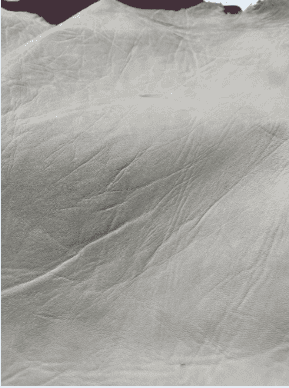
Genuine Sokoto™ crust leather fresh from the pits in Sokoto™, Nigeria. Ready to be retanned and colored. Note the natural, irregular river grain — no two skins are identical.

You can read more about this tanning tradition, and the historical documentation behind it, in our article Sokoto™ Goatskin: Tracing the Historical Roots of a Renowned Bookbinding Leather Tradition.

Stage 2: What Siegel Leather Adds

Traditional Nigerian crust leather and finished Sokoto™ archival leather are not the same material. This point is worth stating plainly, because some imitators stop at Stage 1 and claim equivalence. They do not understand — or do not care — that the archival performance of Sokoto™ is built in Stage 2. Copying the name without executing the process produces a different material entirely – a fake, a poor imitation of the original.

Following Stage 1 pit tanning, selected skins undergo a second controlled stage under Siegel Leather’s technical supervision in Western Europe. This is where the defining archival characteristics of Sokoto™ are established: vegetable retannage using appropriate tannin systems, pH stabilization, and sulfur-free finishing. All dyeing is performed at this stage. No coloration takes place in Nigeria.

The result is a material engineered for long-term stability — not surface appearance. We describe the full specification in our SOKOTO™ Conservation-Grade Goatskin Technical White Paper.

The Grain Is Not Decorative. It Is Structural.

The river grain of Sokoto™ is probably the most visually distinctive thing about it. It is also the feature most frequently faked.

What makes it different is this: the grain on genuine Sokoto™ forms organically during pit tanning, as tannins interact with the fiber structure and the skin dries under natural conditions. It is not uniform. It is not repetitive. It is the result of a biological and chemical process, and it looks like one.

Embossed grain — which is what imitations use — is imposed mechanically after the fact. Under a loupe, the difference is visible: embossed grain shows a regular, tessellated pattern. Natural grain does not. But you don’t always need a loupe. Often the uniformity is apparent with the naked eye to anyone who has handled both.

The more important difference is structural. When you bend leather with a naturally formed grain, the grain and the corium beneath it move together. They were formed and tanned as a unified structure. When you bend embossed leather, the mechanical process that imposed the grain has already stressed the grain-corium interface. On lower-quality hides where this was done to disguise an inadequate natural surface, that interface is often already compromised before the binder touches it. The grain separates. And this is not a theoretical risk — we saw it in the sample we purchased from the competitor.

The imitation. Artificial grain, loose corium, and a seller who couldn’t spell the tannage agent they claimed to use. You would encounter a lot of these in the market when you are not buying from Siegel Leather. 

The USDA documented the consequences of exactly this failure mode in library bindings across American collections. Their 1930 Leaflet No. 69 — authored by chemists Frey and Veitch — remains one of the most thorough analyses of leather deterioration in institutional use. The relevant finding is straightforward: when the grain-corium interface is compromised, failure at the joints is not a question of if, only when. We discuss the USDA research in depth in our piece on premium bookbinding leather durability.

Full Grain Is Not a Marketing Term. It Is a Standard.

Sokoto™ is processed to the classical full-grain standard: hair removal only, with no sodium sulfide applied to the grain surface, no sanding, no buffing, no grain correction. The natural papillary layer is preserved intact. This is what allows the leather to receive gold tooling cleanly, to pare predictably, and to age without the surface failure that plagues mechanically altered hides.

We have written at length about the gap between the classical definition of full grain leather and what the term often means in commercial practice today. If you are sourcing leather described as full grain without asking specifically about buffing, embossing, or surface correction, you may be getting something quite different from what that phrase implies. See our article Full Grain Leather: Classical vs. EU Definition for the full picture.

Chrome in a Vegetable-Tanned Leather Is Not a Minor Issue

Testing of competing products marketed under similar names has confirmed the presence of chrome residues. This is not a technicality. It is a fundamental misrepresentation of the material.

Here is what chrome tanning is: a fast, industrially efficient process that fixes tannins into the hide in hours rather than weeks. It produces a soft, consistent, commercially reliable product. It is used widely across the leather industry for shoes, bags, and upholstery. But it is chemically incompatible with archival bookbinding — and any seller claiming to offer a Bagaruwa-tanned vegetable leather while delivering a chrome-tanned product either does not understand the chemistry or is counting on you not to notice. 

The 1905 Royal Society of Arts Committee on Leather for Bookbinding was unequivocal on the subject of chemically treated and industrially processed leathers. Their findings, which remain the most authoritative scientific analysis of leather deterioration ever conducted, established the tannage chemistry as the primary determinant of long-term stability. We cover this history in our Leather Knowledge Series.

Our Sokoto™ production batches are tested to confirm non-detectable chromium content. That testing is part of the specification, and a guarantee of true quality.

How to Identify Genuine Sokoto™: A Practical Guide

Here is what to look for. These are not aesthetic preferences. They are structural and chemical facts.

What to Look ForGenuine Sokoto™What Imitations Show
Grain patternNatural river grain — tight, irregular, formed organically during pit tanningUniform, repetitive pattern — a telltale sign of mechanical embossing
Grain–corium bondStays intact under bending; grain and corium move as oneGrain lifts or separates at flex points, particularly at joints and hinges
Tannage claimVerified Bagaruwa (Acacia nilotica), correctly spelled, documented“Begaruwa” or other misspellings — copied without understanding the chemistry
Chrome contentNon-detectable in tested batchesChrome residues detected in tested competing products
Certificate of AuthenticityNumbered seal, batch traceable from pastoralist source to finished leatherNone, or generic unverifiable labeling
DyeingAll coloration done under Siegel Leather’s controlled Stage 2 retanning — none in NigeriaOrigin and dyeing process undisclosed

The Certificate of Authenticity Is Not Ceremonial

Every Sokoxto Traditional™ skin supplied by Siegel Leather carries a numbered Certificate of Authenticity with a formal seal. The authentication seal is a chain-of-custody documentation that enables institutional purchasers to trace the material to source.

The certificate documents breed and geographic origin (Nigerian Red Goat, northern Nigeria); the Stage 1 tanning agents and processes (Bagaruwa, pigeon-dung bating, groundnut-oil lubrication, sun-drying, ground-set pit tanning); and Stage 2 processing parameters under Siegel Leather’s specification. Batch-level pH and shrinkage temperature data are included.

No imitator has this. They cannot, because the documentation traces a process that is Siegel Leather’s — not a name they copied, but a two-stage system developed, specified, and verified over decades.

What the 1905 Committee Said About Imitation

The 1905 Royal Society of Arts committee on leather for bookbinding did not mince words about artificially grained and embossed leathers. Their recommendation, adopted by His Majesty’s Stationery Office, was explicit: the binder undertakes not to use leather embossed or grained artificially. This was not an aesthetic preference. It was grounded in documented evidence that mechanically altered grain fails — that the surface correction disguises structural weakness that manifests later, in the joints, under stress, across time.

We have had that finding sitting in our reference library for a long time. It did not surprise us when the sample we purchased from our imitator showed grain-corium separation on bending. The committee documented exactly that failure mode over a century ago. What is remarkable is that the people selling these imitations apparently have not read the literature. Or perhaps they have, and are relying on the assumption that their buyers have not. You can read the full report and our analysis in Leather for Libraries: Why It Still Matters Today.

A Note on Availability

We recently received a hand-delivered sample package from Sokoxto for personal review of the latest production. The hides are outstanding. We maintain an excellent inventory of our core 16 colors — Black, Navy Blue, Red 104, Brown 205, Purple, British Tan, Grey, and others — all available in standard cut sizes, with a full shipment underway.

Every piece of Sokoto™ we sell carries a numbered seal of authenticity. That is your guarantee of what you are actually getting.

If you have questions about identifying genuine Sokoto™, or if you have encountered a product claiming similar characteristics and want a second opinion, contact us. We are happy to talk through specifics. This is the kind of conversation we have been having with bookbinders and conservators for a very long time.

Browse Sokoto™ Goatskin ? siegelleather.live/product/sokoto-goat/

Related Reading from the Siegel Leather Blog

About the Author — Steven Siegel is the owner of Siegel Leather and has served as an expert witness in leather-related cases for over two decades. His work is informed by historical research, archival analysis, and the scientific literature on leather deterioration, including the British Committee’s 1905 report and the USDA’s multi-decade research program.