
Skip to content

How to Remove Oil Stains from Bookbinding Leather (Without Ruining It)

All Things Leather

At Siegel Leather, our commitment to tradition includes not just the leather we supply, but also the stories and heritage behind it. Among our most celebrated materials is Sokoto™ goatskin, the finished archival leather produced through the traditional Sokoxto tanning stage followed by our exclusive retanning and finishing process, cherished by generations of master bookbinders.

This article explores the historical significance of Sokoto™ goats, as documented in two rare publications we proudly feature on our homepage:

  • Hides and Skins Markets of the World by Freudenberg (1959)
  • Report of the Committee of the Society of Arts on Leather for Bookbinding (1905)

A Rare Book with Deep Industry Insight

One of our prized possessions at Siegel is an original copy of Freudenberg’s 1959 Hides and Skins Markets of the World, privately published and given directly to our firm upon release. We’ve since acquired additional copies as they surface among collectors, a testament to the enduring value of this work.

Freudenberg provides rare insight into traditional tanning methods in regions like northern Nigeria. He was among the first to document the use of bagaruwa (African acacia pods) and other native botanicals in in tanning traditions that informed the later Sokoto™ process, a process passed down through generations.

Goatskin vs. Goat Hide: A Matter of Accuracy

A common misconception in the leather world is referring to goatskin as “goat hide.” This is a technical inaccuracy. In proper nomenclature:

  • Hides come from large animals (cowhide, buffalo hide)
  • Skins refer to smaller animals (goatskin, calfskin, sheepskin)

So while “goat hide” may sound familiar, the correct and professional term especially in fine bookbinding circles is goatskin.

Clarifying the “Niger” Misnomer

Many veteran bookbinders who trained on Nigerian goatskin decades ago colloquially referred to these leathers as “Nigers.” While this term was widely used in the trade, it is technically incorrect:

The skins were not from Niger. As of 1959, Niger had never exported hides or leather.

The historical materials referenced in the trade were associated with the Sokoxto region, but the modern designation Sokoto™ refers specifically to Siegel Leather’s defined process and quality standard.

Cockerell’s Endorsement: A Testament to Quality

The renowned British bookbinder Douglas Cockerell, a leading figure in the Arts and Crafts movement, often worked with Sokoto™ goatskin. Known for his attention to durability, tooling performance, and aesthetic refinement, Cockerell found Sokoto™ skins to be uniquely suited for high-end bookbinding.

These historical references reflect earlier trade terminology; “Sokoxto” is the modern commercial designation introduced for the finished leather.

Why Sokoto™ Remains a Specialty Leather for the Ages

Today, Siegel Leather continues to offer Sokoxto Traditional™ and Sokoto™ Morocco, true descendants of the same artisanal tradition described by Freudenberg and used by Cockerell.

These leathers are:

  • No dyeing is performed in Nigeria; all coloration is done during our controlled retanning and finishing stage.
  • Naturally grained – no embossing or mechanical finishing
  • Ideal for gold tooling, blind tooling, and archival rebinding
  • Used by conservators, master binders, and specialty libraries globally

Want to Learn More?

We’re proud to share these stories as part of our mission to keep the art of bookbinding leather alive and respected. Have questions or insights about Sokoto™ goatskin or historic tanning techniques?

Contact us at [email protected] Or call us at +1 (336) 293-7624
Sokoto™ Goatskin: Tracing the Historical Roots of a Renowned Bookbinding Leather Tradition

At Siegel Leather, our commitment to tradition includes not just the leather we supply, but also the stories and heritage behind it. Among our most celebrated materials is Sokoto™ goatskin, the finished archival leather produced through the traditional Sokoxto tanning stage followed by our exclusive retanning and finishing process, cherished by generations of master bookbinders.

This article explores the historical significance of Sokoto™ goats, as documented in two rare publications we proudly feature on our homepage:

  • Hides and Skins Markets of the World by Freudenberg (1959)
  • Report of the Committee of the Society of Arts on Leather for Bookbinding (1905)

A Rare Book with Deep Industry Insight

One of our prized possessions at Siegel is an original copy of Freudenberg’s 1959 Hides and Skins Markets of the World, privately published and given directly to our firm upon release. We’ve since acquired additional copies as they surface among collectors, a testament to the enduring value of this work.

Freudenberg provides rare insight into traditional tanning methods in regions like northern Nigeria. He was among the first to document the use of bagaruwa (African acacia pods) and other native botanicals in in tanning traditions that informed the later Sokoto™ process, a process passed down through generations.

Goatskin vs. Goat Hide: A Matter of Accuracy

A common misconception in the leather world is referring to goatskin as “goat hide.” This is a technical inaccuracy. In proper nomenclature:

  • Hides come from large animals (cowhide, buffalo hide)
  • Skins refer to smaller animals (goatskin, calfskin, sheepskin)

So while “goat hide” may sound familiar, the correct and professional term especially in fine bookbinding circles is goatskin.

Clarifying the “Niger” Misnomer

Many veteran bookbinders who trained on Nigerian goatskin decades ago colloquially referred to these leathers as “Nigers.” While this term was widely used in the trade, it is technically incorrect:

The skins were not from Niger. As of 1959, Niger had never exported hides or leather.

The historical materials referenced in the trade were associated with the Sokoxto region, but the modern designation Sokoto™ refers specifically to Siegel Leather’s defined process and quality standard.

Cockerell’s Endorsement: A Testament to Quality

The renowned British bookbinder Douglas Cockerell, a leading figure in the Arts and Crafts movement, often worked with Sokoto™ goatskin. Known for his attention to durability, tooling performance, and aesthetic refinement, Cockerell found Sokoto™ skins to be uniquely suited for high-end bookbinding.

These historical references reflect earlier trade terminology; “Sokoxto” is the modern commercial designation introduced for the finished leather.

Why Sokoto™ Remains a Specialty Leather for the Ages

Today, Siegel Leather continues to offer Sokoxto Traditional™ and Sokoto™ Morocco, true descendants of the same artisanal tradition described by Freudenberg and used by Cockerell.

These leathers are:

  • No dyeing is performed in Nigeria; all coloration is done during our controlled retanning and finishing stage.
  • Naturally grained – no embossing or mechanical finishing
  • Ideal for gold tooling, blind tooling, and archival rebinding
  • Used by conservators, master binders, and specialty libraries globally

Want to Learn More?

We’re proud to share these stories as part of our mission to keep the art of bookbinding leather alive and respected. Have questions or insights about Sokoto™ goatskin or historic tanning techniques?

Contact us at [email protected] Or call us at +1 (336) 293-7624

How to Remove Oil Stains from Bookbinding Leather (Without Ruining It)

At Siegel Leather, we’re committed to helping our customers preserve and care for the fine specialty leathers we supply – including our signature Sokoto™ goatskin. Sometimes, even with the best intentions, mistakes happen. And when they do, we’re here to offer guidance.

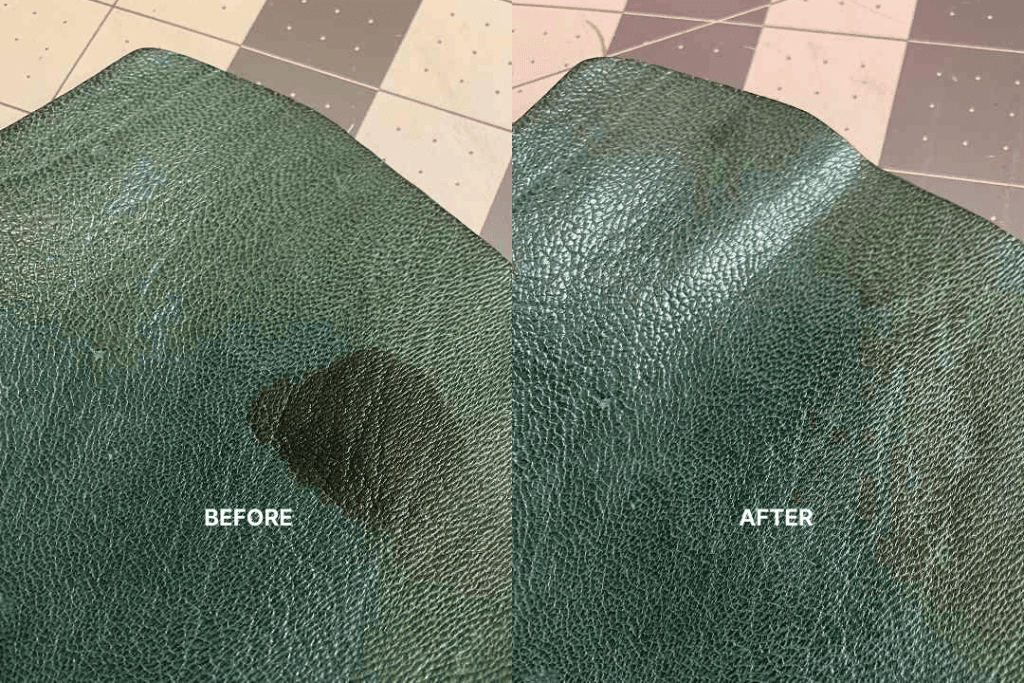
We’ve received an email from a concerned customer who had been advised – incorrectly – to use mink oil to clean excess gold foil off of Sokoto™ leather. The result? A deep, dark oil stain that nearly ruined the project.

What Went Wrong: Why Mink Oil Should Never Be Used on Sokoto™

Mink oil and other heavy, penetrating oils are not suitable for cleaning bookbinding leathers, especially premium vegetable-tanned varieties like Sokoto™ Traditional or Sokoto™ Morocco.

These oils are:

  • Highly absorbent and difficult to remove
  • Known to darken leather permanently
  • Often incompatible with archival materials
  • Likely to damage the grain-corium structure of fine goatskin

In this case, the leather absorbed the oil unevenly, leaving a large blackened stain across the cover, a heartbreaking sight for any binder.

The Solution: How We Helped Remove the Stain

We advised the customer to attempt cleaning using a polar organic solvent in this case, butane, which is commonly found in small amounts in standard lighter fluid.

Important: This process should be done with great care and in a well-ventilated area. Here’s the method we recommended:

Leather Oil Stain Removal – Safe DIY Method

  1. Apply a small amount of lighter fluid (butane-based) to a clean white cloth or paper towel
  2. Gently blot the stained area — do not rub, as friction may damage the grain
  3. Use short, repeated dabs, allowing time between applications
  4. As the solvent evaporates, it may draw oil up and out of the leather
  5. Continue blotting with fresh clean cloths until no more oil transfers

Before & After: A Successful Recovery

Thankfully, this method worked. The stain lightened significantly, and the customer was able to salvage the project — to everyone’s relief.

Leather Care Advice from Siegel Leather

Our leathers are produced for archival-quality performance, but their natural, unaltered grain also makes them more sensitive to improper care methods.

Here are a few best practices:

  • Never apply oils, waxes, or conditioners not tested on archival goatskin
  • Avoid heavy rubbing, solvents, or water-based cleaning
  • Test any cleaning method on a scrap or hidden area first
  • Contact us directly before attempting repairs or restoration

We’re Here to Help

If you’re unsure how to care for your leather or encounter a mishap, we’re just a message away.

Siegel Leather: Bookbinding Leather Suppliers Who Care

We don’t just sell bookbinding leathers, we also support the community that uses them. Are you a first-time customer or a seasoned binder working with specialty leathers? You will find invaluable resources on our website and should you have questions or concerns, we are always available to guide you through best practices and help solve problems when they arise.